
Sumonux GamesOutstepDev log

Epic AI MegaJam 2026 · Glass Box dev log

A turn-based duel in an ancient jungle temple. Every step drops the stone you leave, and its twin: the other stone carved with the same symbol.

Play a duelYou are the River Frog. Reach the gate with the arrow.
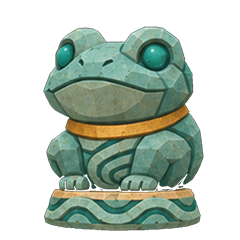
River Frog, your figurine
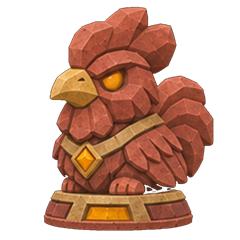
Ember Rooster, the rival
Your move. Step to a glowing stone.

The rules and the rival's evaluation are ported from the browser prototype Oleg made with ChatGPT a week before the jam to test the idea. Here the rival searches as deep as it can in half a second. The game itself re-implements all of it in C++; the art is from the game.

Descend
What 90 hours produced

The game in numbers

108commits, plus a final day in the working tree
17,206lines of C++, all written by AI
101rule tests, all green at the last full run
72carved tile symbols
18figurines with 64 skins
10power-up cards
6temple floors, 5 rule twists
12languages

The ten tablets

Power-up cards you find lying on the board as 3D pickups. The symbols on the duel board above are the game's real carvings too: 32 of the 72, dealt at random.

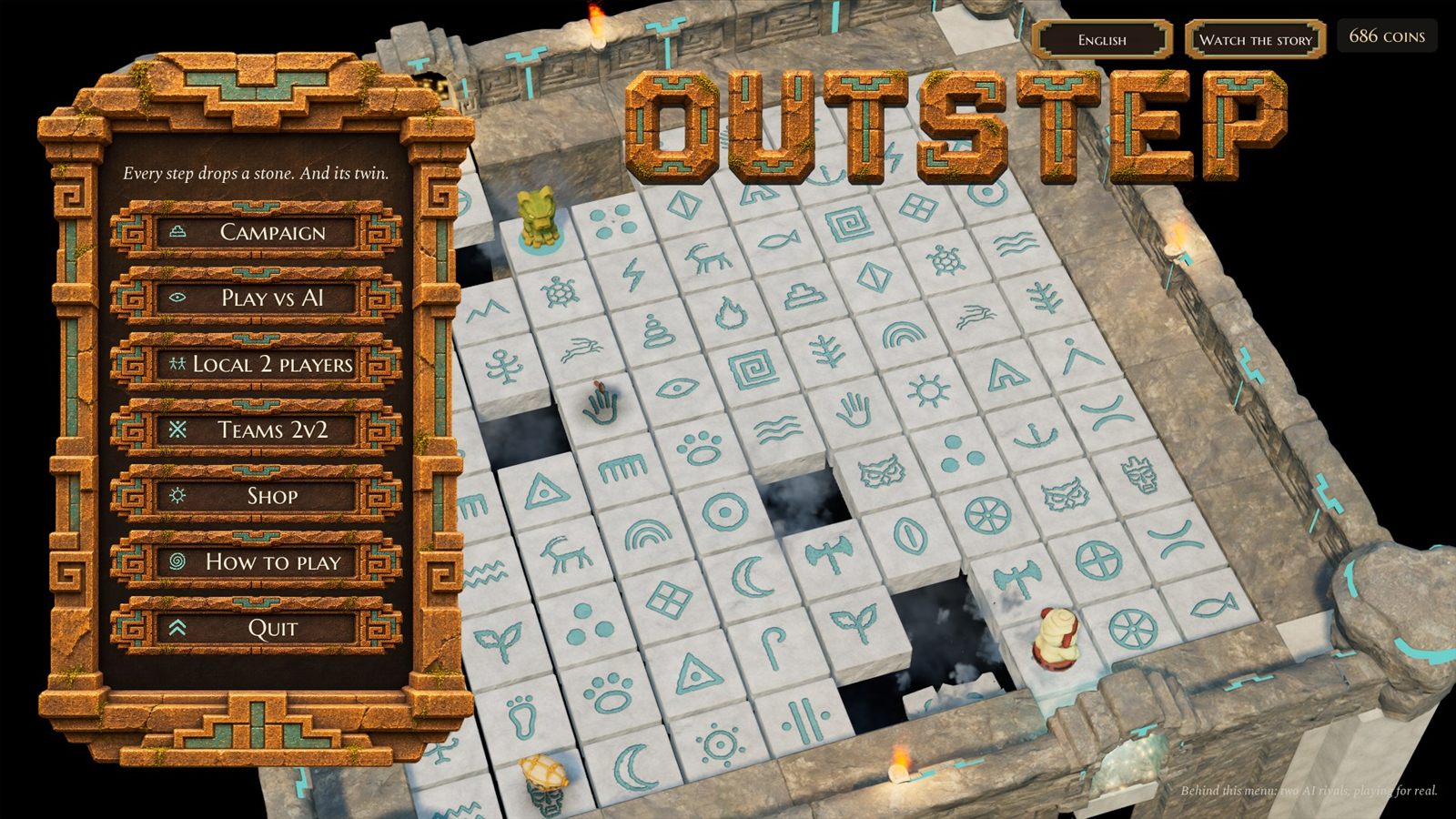
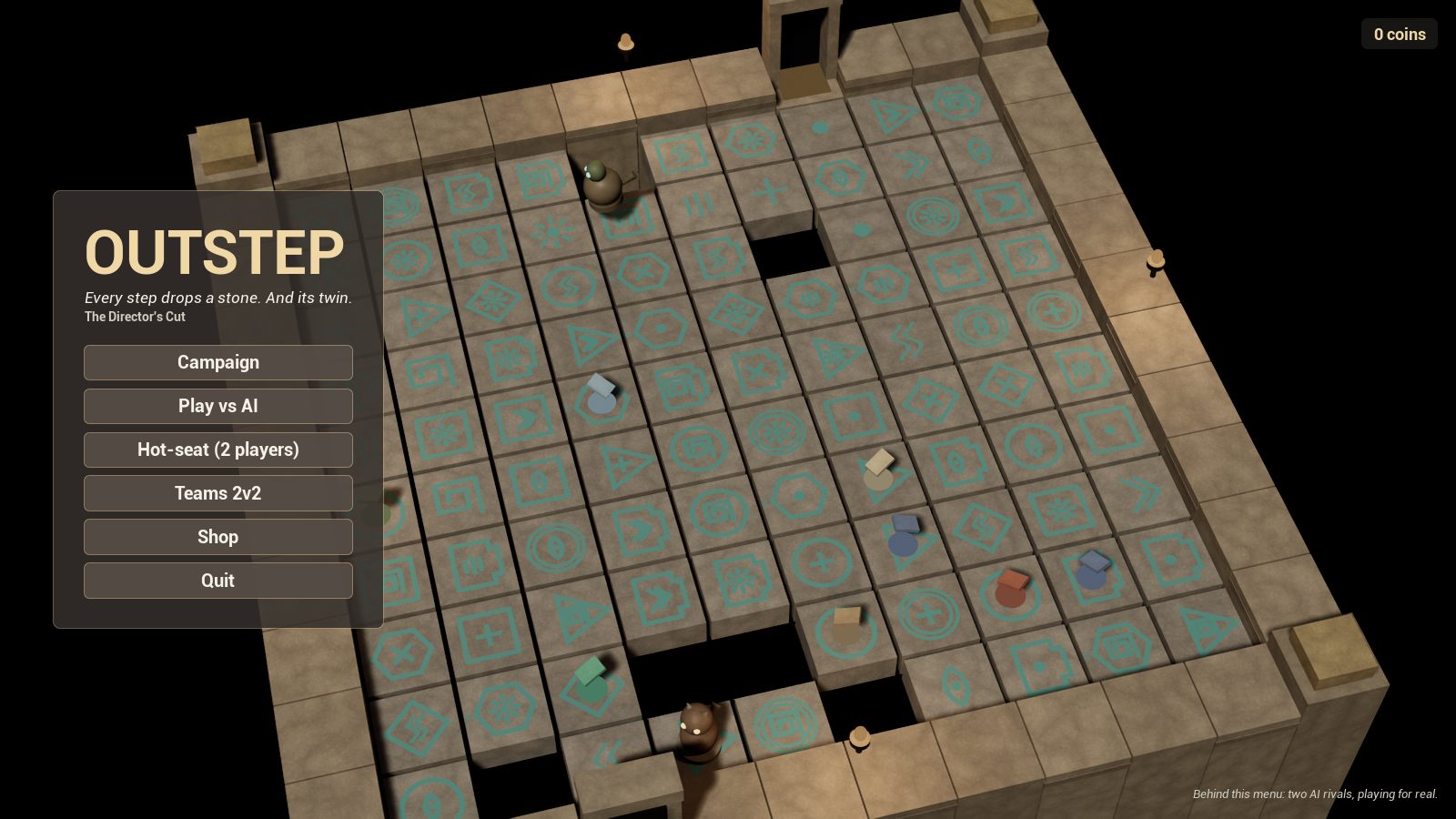
Final main menu: a carved sandstone panel and stone title letters over a white marble board The same menu fifty minutes into the jam: a grey panel over grey cubes Minute 50Day 4
Drag to compare. Same screen, same code path, same live AI match behind it: fifty minutes into the jam on the left, the last day on the right.
Expected vs actual

The code was fast. Taste took passes.

Before the jam the AI estimated 4 to 6 working days for a first build. The whole playable loop existed 55 minutes after the start. That changed what the rest of the 90 hours were for: almost none of the time went into typing, nearly all of it went into looking at the game and deciding it was not good enough yet.

Where the estimate was too slow

Each pair uses its own scale: the hatched bar is the low end of the AI's own estimate, the gold bar is the measured time. A working day counts as 8 hours.

Where no estimate survived

Nobody planned these as multi-pass jobs. Each red stone is a version a human looked at and rejected.

Git history, minute by minute

Pulse of the build

Every teal notch is a real commit. The dark bands are the hours Oleg slept. The notches inside them are the AI working alone from a list he left, logging its choices in a morning report. The two stretches with no commits on Nov 13 and Nov 14 are not pauses. They are the most intense hours of the jam: Oleg, awake, making the story film by hand. Every amber notch there is a key frame, a video clip, a voice take or a sound saved into the film project.

Move over the chart to read a commit.
commitOleg asleepfilm work: a key frame, video clip, voice or sound savedfinal-day polish: 87 files in the working tree, committed at submission
Top to bottom

The descent

Days are counted from the start signal at 23:00 on Nov 11, so the jam ends on day 4. Each step is marked by how it went. Oleg's quotes are verbatim voice dictation, typos included. He calls his two AI tools by name: Leo is Claude Code, the coding assistant, and Mira is ChatGPT's image model. They are tools, not teammates. This is a solo project.

Day 3, in one night

Six floors, each bending one rule

The same wall, column and tile meshes are reused on every floor and re-dressed. What changes is one rule, and the rule is covered by tests before it gets any art.

Day 2 into day 3 · the most manual part

A one-minute film, in a language that does not exist

The game opens with a 68-second story: three gods, one throne, and an arena that decides who rules for the next thousand years. Nothing else in the project took as much hand work. From the afternoon of day 2 to the evening of day 3, Oleg was in Adobe Premiere Pro on the only computer that has it, and on that computer the game had to wait.

The Monkey God's thousand years are nearly over. The Eagle and the Jaguar have come for the throne.
The gate rises out of the courtyard. Behind it is the board you play on.
68seconds of film
30painted key frames
17video clips in the cut
31voice, sound and music files
16timed lines and title cards
12subtitle languages

How the film was made

  1. A language firstThe gods should not speak English. With Leo (Claude), Oleg built a small tongue with a fixed dictionary, spelled phonetically so a voice model reads every word the same way each time.
  2. Key framesThirty still images of the gods, the throne and the gate, generated and picked one at a time until the three characters stayed the same from shot to shot.
  3. MotionThe stills became video clips in Kling, each from a written shot description. Many takes, seventeen clips kept.
  4. Voices and soundEach god speaks the invented lines through ElevenLabs. Footsteps, wings, an eagle's cry, a golden fruit, a stone gate, jungle air and the music were generated and chosen by ear.
  5. The cutAssembled by hand in Premiere Pro, with the speech lined up to the mouths by eye.
  6. Into the gameThe film plays on first launch and can be skipped. The game draws the subtitles itself, in 12 languages, from the Premiere timeline. The two title cards stay in the gods' tongue.
Right now it just collects everything together like it takes hours for us . We're not so fast like you.😊Oleg, by voice, after the first day in Premiere

The gods' tongue

The opening of the film as it is spoken. Hover a line, or press Translate.

How it was made

From a sentence to a stone figurine

Every asset goes through a small scripted pipeline, so any of them can be redone in minutes when a human says it looks wrong. This is the one for the 16 premium figurines.

One of the four views Mira (ChatGPT) drew for the River Frog.
  1. A text brief, never a photoLeo (Claude) writes the brief. Reference photos from the web stay out of it, after Oleg stopped one on licensing grounds.
  2. Four views, three parts, one imageMira (ChatGPT) draws head, body and base stacked in a single tall image for front, back, left and right. Our first try generated the three parts separately and cost three times the credits.
  3. Tripo, four face countsThe same views become meshes at 3k, 5k, 7k and 9k faces. Leo (Claude) picks the cleanest by eye. Some came out broken: spikes on the Coati, a cone for the Rooster's base.
  4. Blender, headlessScripts split the model back into head, body and base, so the head can nod and the figurine can squash when it lands. No skeleton, no rig.
  5. Gold and eyesMira (ChatGPT) writes colour-based scripts that produce a metallic mask for gold trim and a glow mask for the eyes, aligned to the model's UVs.
  6. Into Unreal by file nameDrop the files into RawAssets/Meshes/<Category>/<Name>, run one script, and the figurine is in the shop. A stone-grain normal map goes over everything so generated art reads as carved rock.
Who / toolWhat they made
OlegGame design, the rules of every floor, art direction, story and the intro video edit, playtesting, every "this looks wrong" call. Hand-made models: board block, columns, walls, corner heads, the gate, the Toucan remodel, the bomb.
Claude CodeAll C++: rules engine, AI opponent, cards, progression, the Unreal presentation, the whole UI in code-only Slate, materials, effects. Also the localization pipeline, Blender scripts, build, test and screenshot tooling, and driving Blender, Tripo and ElevenLabs.
ChatGPT imagesTile symbols, stone, lava, water and rope textures, the UI kit and menu art, the 4-view sheets for every 3D model, skin designs, gold and eye masks, concept sheets.
Tripo3D figurines from the 4-view sheets, 64 skin retextures, card pickups, props.
ElevenLabsMusic, ambience and sound effects, instrumental only. The AI cannot hear, so Oleg picked every sound by ear.
Fab packsNiagara effects: torch fire, dust, explosion, portals, hop trails, water.

The rule we kept: look before you commit

The AI cannot play the game, so it built itself eyes. A script launches the game with test flags (a floor, a seed, a forced card, a camera angle), saves screenshots, and Leo (Claude) reads them before anything is committed. Oleg judges what a still cannot show: motion and sound.

The rule we learned: test the packaged build

Three times an asset looked right in the editor and wrong in the shipped game: white tiles, a black hammer, missing trails. Each time a folder was missing from the cook list. From day 3 on, a separate test build was packaged and checked after every batch.

Not carved yet

Below the last floor

Things we postponed on purpose, in roughly the order we would build them. Each one came up during the jam and was parked so the build could ship.

Credits and third-party assets

AssetSource and use
Water MaterialsBy tharlevfx, Creative Commons Attribution 4.0. The water in the Flooded Halls.
Fab packsFab Standard License: Niagara Footstep VFX (Sidearm Studios), Blink and Dash VFX (pelengami), Pixie Dust Trail VFX (SHOGUN GAMES), Portal Pack (UEDEV), M5 VFX Vol 2 Fire and Flames (M5VFX), Realistic Starter VFX Pack Vol 2 (FX Cat UA), Quixel Megascans surface "Stone Wall".
FontsMarcellus SC, Forum, Spectral (SIL Open Font License); Droid Sans Fallback (Apache 2.0). This page uses the same faces as the game.
EngineUnreal Engine 5.8 by Epic Games.
AI toolsClaude Code (Anthropic), ChatGPT image generation and Codex (OpenAI), Tripo, ElevenLabs, Adobe Premiere Pro (story video, trailer), Kling 3 (trailer clips), Blender.
Pre-jam workDesign notes, a browser prototype of the rules and 2D concept images, declared separately. None of it ships in the game: a project generator refused to run before the jam's start time, and the first commit is stamped 23:04, four minutes in.